
Risk Reduction
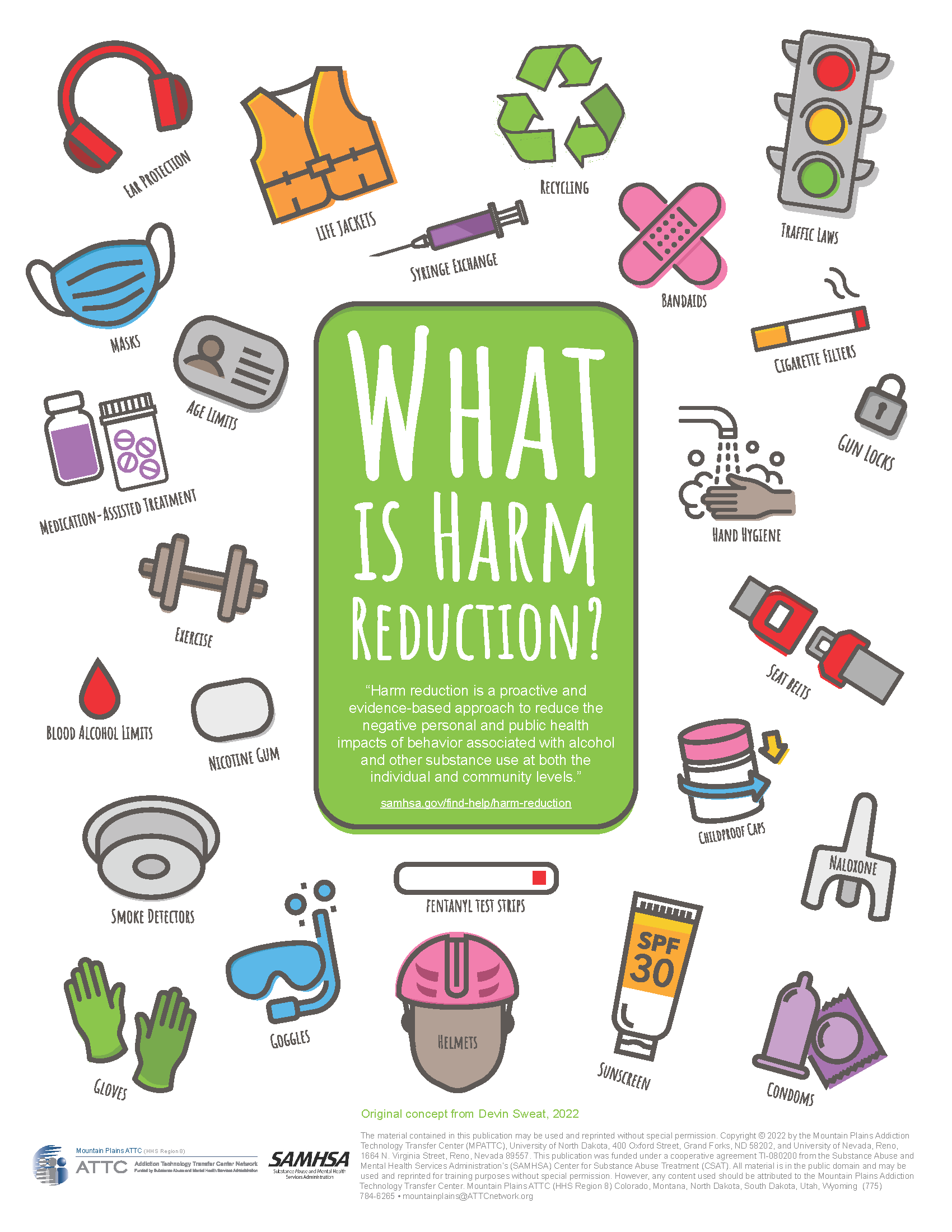
Risk reduction is an approach that emphasizes engaging directly with people who use drugs to prevent overdose and infectious disease transmission, improve the physical, mental, and social wellbeing of those served, and offer low-threshold options for accessing substance use disorder treatment and other health care services.
A comprehensive prevention strategy, risk reduction is part of the continuum of care. Risk reduction approaches have proven to prevent death, injury, disease, overdose, and substance misuse. Risk reduction is effective in addressing the public health epidemic involving substance use as well as infectious disease and other harms associated with drug use. Specifically, risk reduction services can:
- Connect individuals to overdose education, counseling, and referral to treatment for infectious diseases and substance use disorders.
- Distribute opioid overdose reversal medications (e.g., naloxone) to individuals at risk of overdose, or to those who might respond to an overdose.
- Lessen harms associated with drug use and related behaviors that increase the risk of infectious diseases, including HIV, viral hepatitis, and bacterial and fungal infections.
- Reduce infectious disease transmission among people who use drugs, including those who inject drugs by equipping them with accurate information and facilitating referral to resources.
- Reduce overdose deaths, promote linkages to care, facilitate co-location of services as part of a comprehensive, integrated approach.
- Reduce stigma associated with substance use and co-occurring disorders.
- Promote a philosophy of hope and healing by utilizing those with lived experience of recovery in the management of risk reduction services, and connecting those who have expressed interest to treatment, peer support workers and other recovery support services.
Source: SAMHSA
From Our Collection
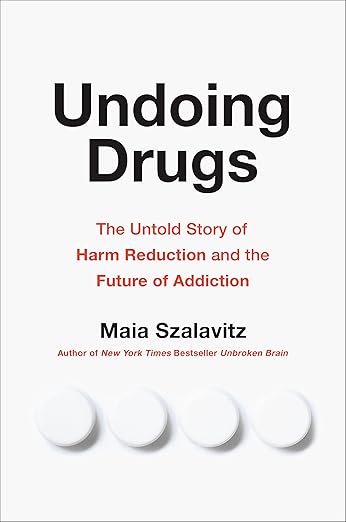
Statewide Resources
- Advancing Connecticut Together: Harm Reduction Department
- Connecticut Harm Reduction Alliance
- Connecticut Harm Reduction Resources
- Connecticut Syringe Exchange Program
- DrugFreeCT
- Fentanyl Testing To Prevent Overdose
- Live Loud
- Opioid Overdose Prevention / Naloxone (Narcan) Initiative
- Safe Spot Hotline: 1-800-972-0590
- SMART Recovery
- Youth Recovery CT
Research & Data
- Harm Reduction Journal
- Harm Reduction Program Data & Evaluation
- Harm Reduction Research Network
- Research Data, Measures & Resources - NIDA
Links to various NIDA publications, databases, surveillance, prevention & treatment resources, and more.
Apps
NORA App
NORA is a free app from the Connecticut Department of Public Health. Use NORA to prevent, treat, and report opioid overdose.
Curricula & Lesson Plans
- Safety First: Comprehensive Drug Education and Intervention Lessons
From Stanford Medicine REACH Lab
Videos
Podcasts
Let's Talk Addiction & Recovery: Does Harm Reduction Actually Work? (Hazelden) Opioid Overdose Prevention (American Medical Association)